

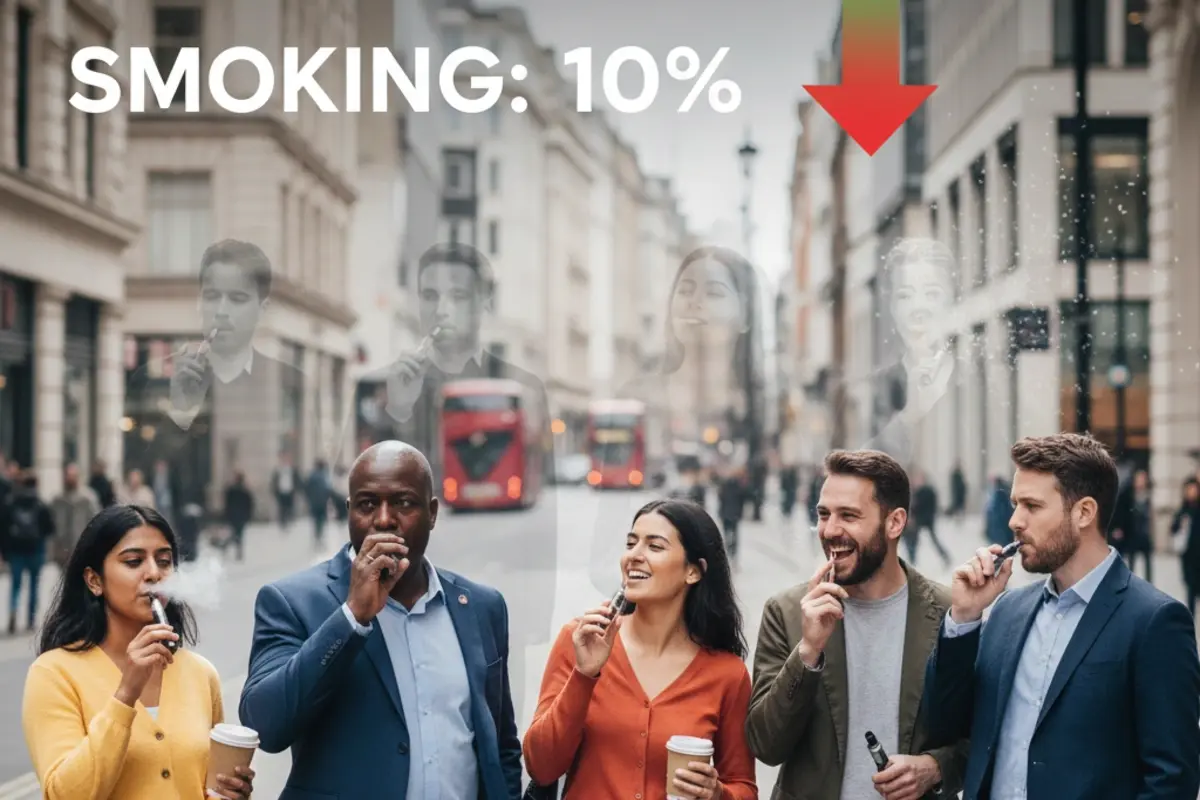
Britain has reached a historic milestone in its public health journey. For the first time ever, the number of adults who use e-cigarettes (vaping) has overtaken those who smoke traditional tobacco cigarettes. This shift marks a profound transformation in how nicotine is consumed across the UK and signals a long-term decline in cigarette smoking that once dominated British society.
Recent national data shows that around 5.4 million adults now vape, while approximately 4.9 million adults continue to smoke cigarettes. This reversal did not happen overnight. Instead, it reflects years of public health campaigns, changing social attitudes, technological innovation, and evolving consumer behaviour.
This article explores why vaping has overtaken smoking in Britain, what it means for public health, how demographics and lifestyles are shaping nicotine use, and what the future may hold for vaping, smoking, and regulation in the UK.
1. Britain’s Smoking Decline: A Long-Term Trend Reaches a Turning Point
Smoking was once deeply embedded in British culture. Decades ago, cigarettes were socially acceptable, widely advertised, and commonly used in public spaces. However, over the past 30 years, smoking rates have fallen steadily due to:
- Public smoking bans
- Increased tobacco taxation
- Graphic health warnings
- Anti-smoking education campaigns
- Greater awareness of smoking-related diseases
As a result, smoking prevalence has dropped to its lowest level on record. What makes the current moment unique is that vaping has not only risen alongside this decline — it has now overtaken smoking entirely.
This turning point represents more than just a numerical change. It signals a fundamental shift in nicotine habits, particularly among working-age adults.
2. Why Has Vaping Become More Popular Than Smoking?
Several interconnected factors explain why vaping has now surpassed smoking in Britain.
2.1 Harm Reduction Awareness
Many adults view vaping as a less harmful alternative to smoking. While vaping is not risk-free, it does not involve burning tobacco — the process responsible for releasing most toxic chemicals in cigarettes. This perception has encouraged millions of smokers to switch.
For many, vaping represents a practical step away from smoking without immediately giving up nicotine.
2.2 Vaping as a Smoking Cessation Tool
A significant proportion of vapers are former smokers. Many report that vaping helped them reduce cigarette consumption or quit smoking altogether. Unlike nicotine patches or gum, vaping mimics the physical and social aspects of smoking, making it easier for some smokers to transition.
This role as a cessation aid has played a major part in vaping’s growth.
2.3 Product Variety and Innovation
The vaping industry has evolved rapidly, offering:
- Disposable vapes
- Refillable pod systems
- Adjustable devices
- Nicotine-free options
- Wide flavour ranges
This variety makes vaping more appealing and customizable than cigarettes, which have changed very little over time.
2.4 Changing Social Norms
Smoking has become increasingly stigmatized, while vaping — until recently — has not faced the same level of social rejection. Many people see vaping as cleaner, more modern, and less disruptive than smoking, particularly in urban environments.
3. Who Is Vaping in Britain? Key Demographics Explained
Understanding who vapes helps explain how vaping overtook smoking.
3.1 Age Groups Driving Vaping Growth
Vaping is most common among adults aged 25 to 49, a group that includes many former smokers. Younger adults aged 18 to 24 also vape, though recent trends suggest growth in this group may be stabilizing.
Older adults are less likely to vape, reflecting generational differences in technology adoption and habits.
3.2 Former Smokers vs Never-Smokers
The majority of adult vapers are ex-smokers, supporting the idea that vaping has played a role in reducing smoking rates. However, there is growing concern about never-smokers taking up vaping, raising questions about long-term nicotine dependency.
3.3 Dual Users
Some adults continue to both smoke and vape. While this group exists, its size has decreased as more people fully transition away from cigarettes.
4. Public Health Impact: Is This a Positive Development?
The rise of vaping over smoking presents both opportunities and challenges for public health.
4.1 Potential Health Benefits
If vaping replaces smoking rather than adding to nicotine use, it could significantly reduce smoking-related illnesses such as lung cancer, heart disease, and respiratory conditions. From a harm-reduction perspective, this shift could save lives over time.
4.2 Ongoing Health Uncertainties
Vaping is still relatively new compared to smoking. Long-term health effects are not yet fully understood. While evidence suggests it is less harmful than smoking, it is not harmless.
4.3 Nicotine Addiction Remains a Concern
Nicotine is highly addictive, regardless of delivery method. Many vapers struggle to quit, creating a new form of long-term nicotine dependence that health systems must address.
4.4 Misconceptions About Risk
Despite evidence showing vaping is less harmful than smoking, many people believe vaping is equally dangerous or worse. These misconceptions can discourage smokers from switching and undermine harm-reduction efforts.
5. Cultural and Lifestyle Shifts Behind the Trend
Vaping’s rise reflects broader cultural changes in Britain.
5.1 Technology-Driven Consumption
Vaping fits into a tech-savvy culture that values personalization, innovation, and convenience. Devices are often designed to feel modern and user-friendly, unlike traditional cigarettes.
5.2 Social Acceptability
Smoking is now widely restricted in public spaces and viewed negatively by many communities. Vaping, although increasingly regulated, has been more socially tolerated — contributing to its popularity.
6. Economic Impact: Vaping vs the Tobacco Industry
The shift from smoking to vaping has reshaped the market.
6.1 Decline in Tobacco Sales
Cigarette sales have fallen as fewer people smoke. This decline affects tobacco companies, retailers, and tax revenue.
6.2 Growth of the Vaping Market
Vaping has become a major retail sector, with vape shops, convenience stores, and online platforms benefiting from rising demand. Vapes often generate higher margins than cigarettes due to product diversity and repeat purchases.
7. Regulation and Government Response
As vaping overtakes smoking, regulation has become more complex.
7.1 Protecting Young People
Authorities are increasingly focused on preventing youth vaping through age verification, marketing restrictions, and potential flavour controls.
7.2 Balancing Harm Reduction and Prevention
Policymakers face a difficult balance: encouraging smokers to switch while discouraging non-smokers from starting. Future regulation will likely focus on targeted controls rather than outright bans.
8. The Future of Nicotine Use in Britain
The fact that vaping now outpaces smoking suggests several future trends:
- Smoking rates are likely to continue falling
- Vaping will remain a major nicotine source
- Public health strategies will evolve
- Regulation will become more nuanced
- Greater emphasis will be placed on quitting nicotine altogether
Britain may be moving toward a post-smoking era, but not a nicotine-free one.
Conclusion: A Defining Moment in British Public Health
The moment vaping overtook smoking in Britain marks a defining chapter in public health history. It reflects decades of progress against smoking, alongside the rise of new challenges linked to nicotine addiction and regulation.
Whether this shift ultimately leads to better long-term health outcomes will depend on policy decisions, public education, and individual behaviour. What is clear, however, is that Britain’s relationship with nicotine has fundamentally changed — and the effects will be felt for years to come.